
 Save
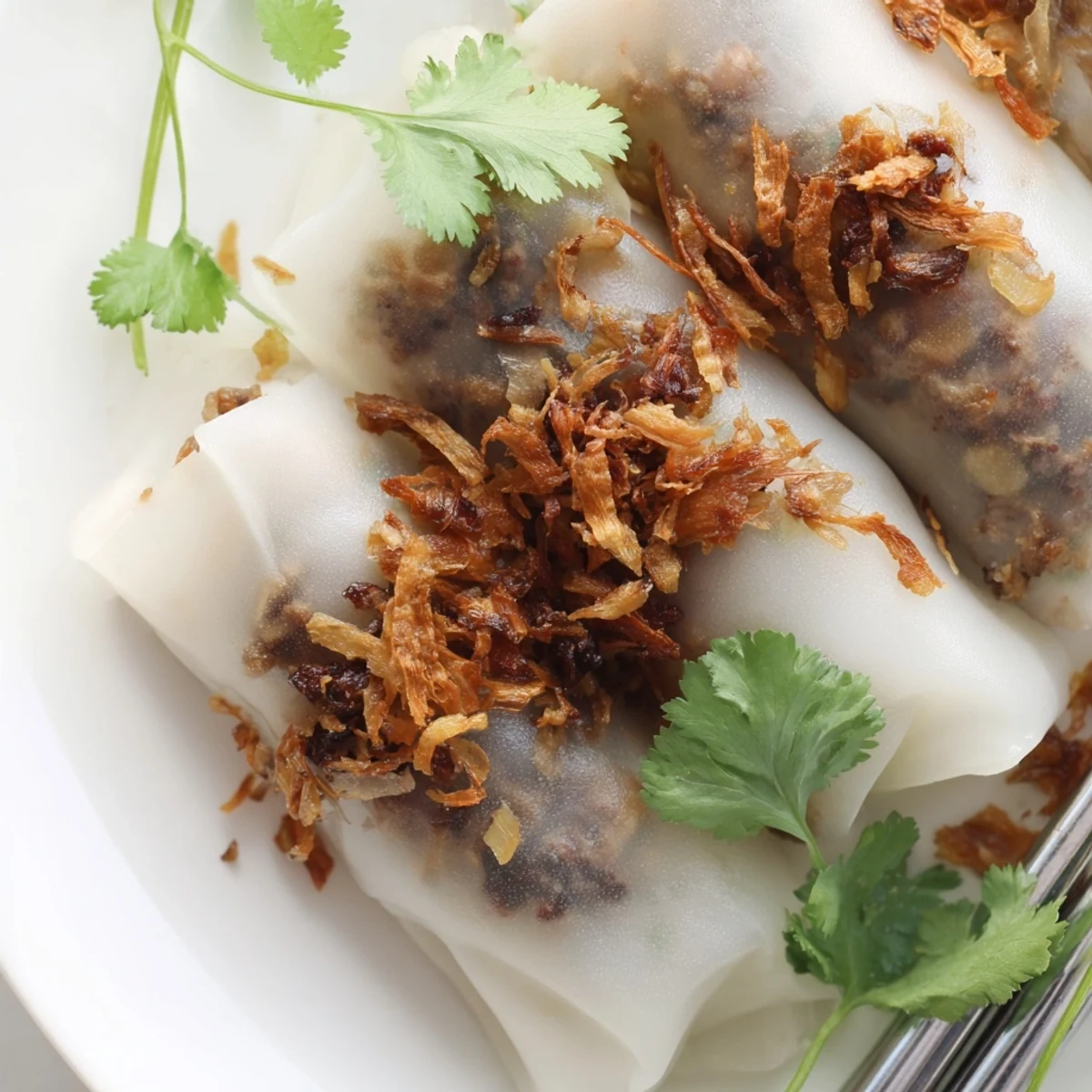
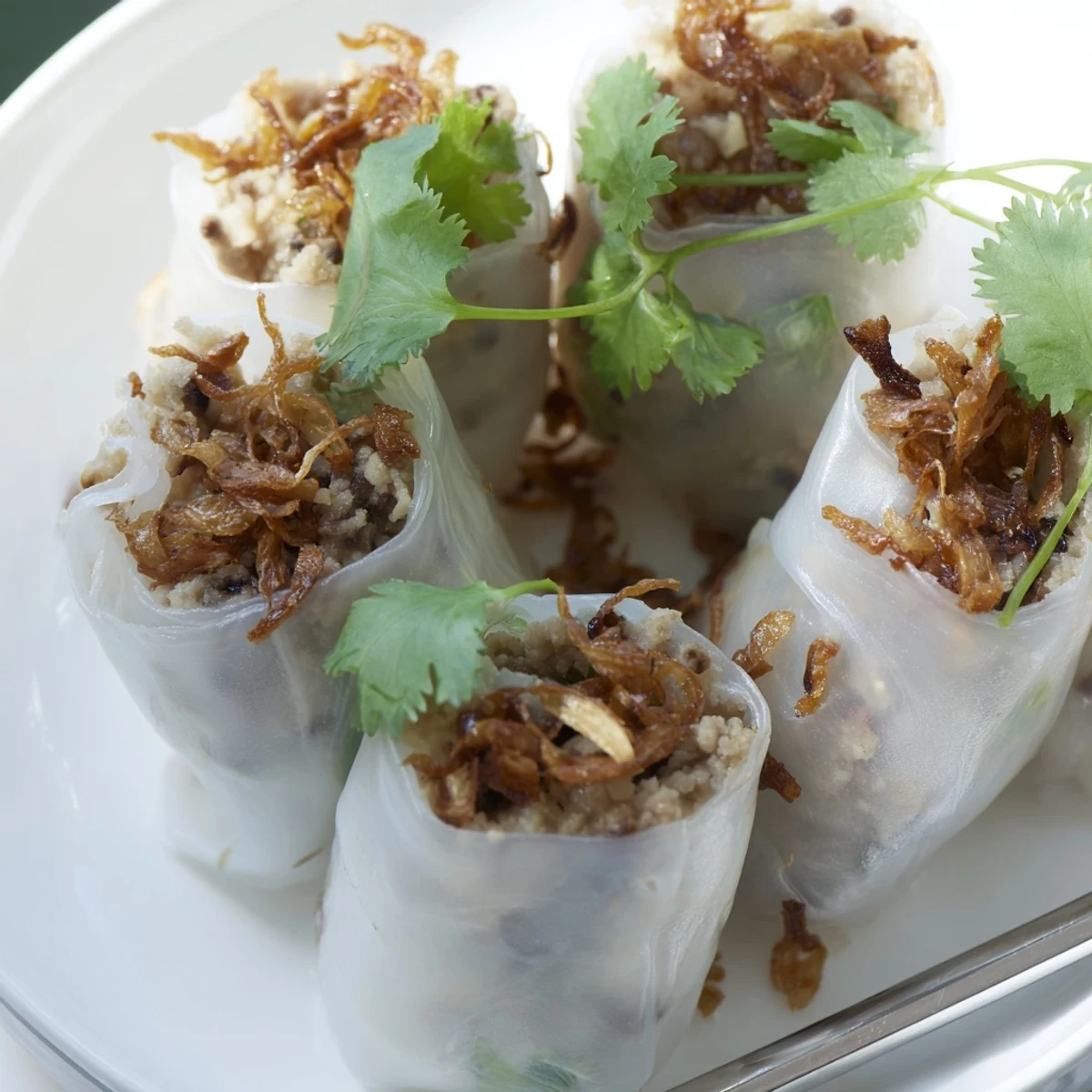
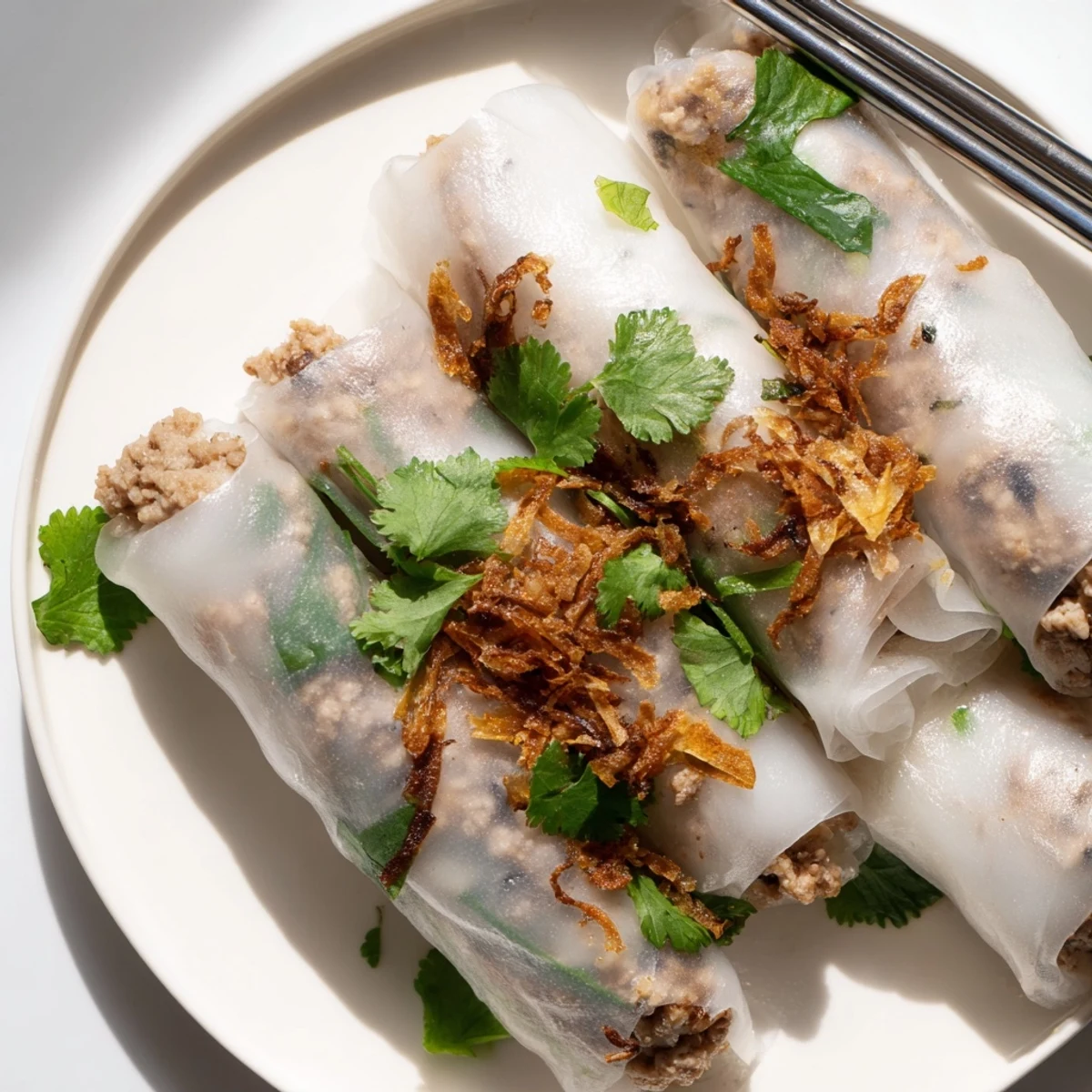
Save Master the art of creating these delicate Vietnamese rice rolls with a silky, translucent wrapper. The traditional technique involves steaming thin layers of rice batter until just set, then filling with a savory mixture of ground pork, wood ear mushrooms, and aromatics. Each roll delivers a perfect balance of textures—soft and yielding exterior, tender and aromatic filling. The dish comes alive with fresh garnishes including crispy fried shallots, bright cilantro, crisp bean sprouts, and cool cucumber slices. A homemade nuoc cham dipping sauce adds essential tangy, sweet, and savory notes that tie everything together. Best enjoyed immediately while the rolls retain their signature delicate texture.
The steam rising from my aunties tiny kitchen in Hanoi still haunts me in the best way possible. She would make these translucent rice rolls at dawn, the batter hitting the hot cloth with a whisper soft hiss. I watched, mesmerized, as she worked with practiced hands, turning simple ingredients into something almost magical. That first bite, warm and slippery with fragrant pork filling, changed everything I thought about breakfast.
Last winter I attempted to recreate that memory in my tiny apartment kitchen. My first attempts were tragic, tearing into ragged pieces that refused to roll. My roommates gathered around, offering encouragement while I sweated over the steamer, determined to get it right. By batch four, something clicked, and we sat cross-legged on the floor, eating warm rolls straight from the plate, laughing through burnt fingertips and imperfect folds.
Ingredients
- Rice flour: The foundation of everything, find a good quality brand for that authentic silky texture
- Tapioca starch: This is what gives the rolls their signature stretch and delicate chew
- Ground pork: Use fatty pork for the juiciest filling, lean meat dries out too quickly
- Wood ear mushrooms: Soak them until they are plump and slightly crunchy, they add incredible texture
- Fried shallots: Do not skip these, they are the crispy crown jewel of the whole dish
- Fish sauce: The backbone of Vietnamese cooking, invest in a good bottle
Instructions
- Mix the batter:
- Whisk everything until completely smooth, then walk away and let it rest for at least twenty minutes
- Cook the filling:
- Let the onions get golden and fragrant before adding the pork, and do not rush the browning
- Stir up the sauce:
- Mix until the sugar fully dissolves, then taste and adjust until it hits all your happy places
- Steam the sheets:
- Work quickly but gently, swirling the batter thin and watching for that moment it turns translucent
- Roll them up:
- Keep your hands light and confident, tucking and rolling like you are folding a precious letter
- Bring it together:
- Pile on the fresh herbs and crispy shallots, then serve immediately while everything is still warm
 Save
Save These rolls have become my go-to when friends need comfort. There is something about the ritual of steaming and rolling, the gathering around with little bowls of sauce, that turns a simple meal into a shared experience. My kitchen fills with the same steam that once filled my aunties, and suddenly I am transported back to that narrow street in Hanoi.
Getting The Perfect Texture
The secret lies in patience with your batter. Let it rest so the starches can fully hydrate, and do not be tempted to add more liquid if it seems thin. That thinness is exactly what you want. Practice your steaming technique, and accept that your first few sheets might not be perfect.
Making It Your Own
While the traditional filling is hard to beat, do not be afraid to experiment. Shrimp works beautifully, or try mushrooms alone for a vegetarian version. The dipping sauce is also yours to adjust, more lime for brightness or extra chili for heat.
Serving Suggestions
These rolls are best eaten the moment they are made, but you can prepare all the components ahead. Steam the sheets just before serving, and keep everything warm in a low oven. Set out bowls of sauce and let everyone customize their own plates.
- Have extra lime wedges on hand for squeezing fresh over the rolls
- Keep a small bowl of water nearby for wetting your fingers while assembling
- Make double the sauce because everyone will want extra
 Save
Save There is something deeply satisfying about mastering a dish that looks so delicate but delivers such bold flavors. Make these for someone you love.
Common Recipe Questions
- → What makes Banh Cuon different from other rice rolls?
-
The rice wrapper is exceptionally thin and translucent, steamed directly on a cloth-covered surface rather than being boiled or fried. This creates a uniquely delicate, silky texture that almost melts in your mouth.
- → Can I make the rice batter ahead of time?
-
Yes, the batter actually benefits from resting. Prepare it up to 24 hours in advance and store it refrigerated. Let it come to room temperature before steaming for the most consistent results.
- → What's the secret to getting thin, translucent wrappers?
-
Batter consistency is crucial—it should be thinner than crepe batter, similar to heavy cream. Use just enough batter to coat the surface in a thin, even layer, and steam only until set, about 1-2 minutes.
- → How do I store leftovers and reheat properly?
-
Place rolls in an airtight container with parchment paper between layers. Refrigerate for up to 2 days. Reheat by steaming for 1-2 minutes or microwaving with a damp paper towel to prevent drying.
- → Can I make Banh Cuon without a traditional steamer setup?
-
Absolutely. Use a nonstick skillet with a lid—pour the batter, cover, and cook over medium-low heat. The results will be slightly different but still delicious and closer to the traditional texture than other methods.