
 Save
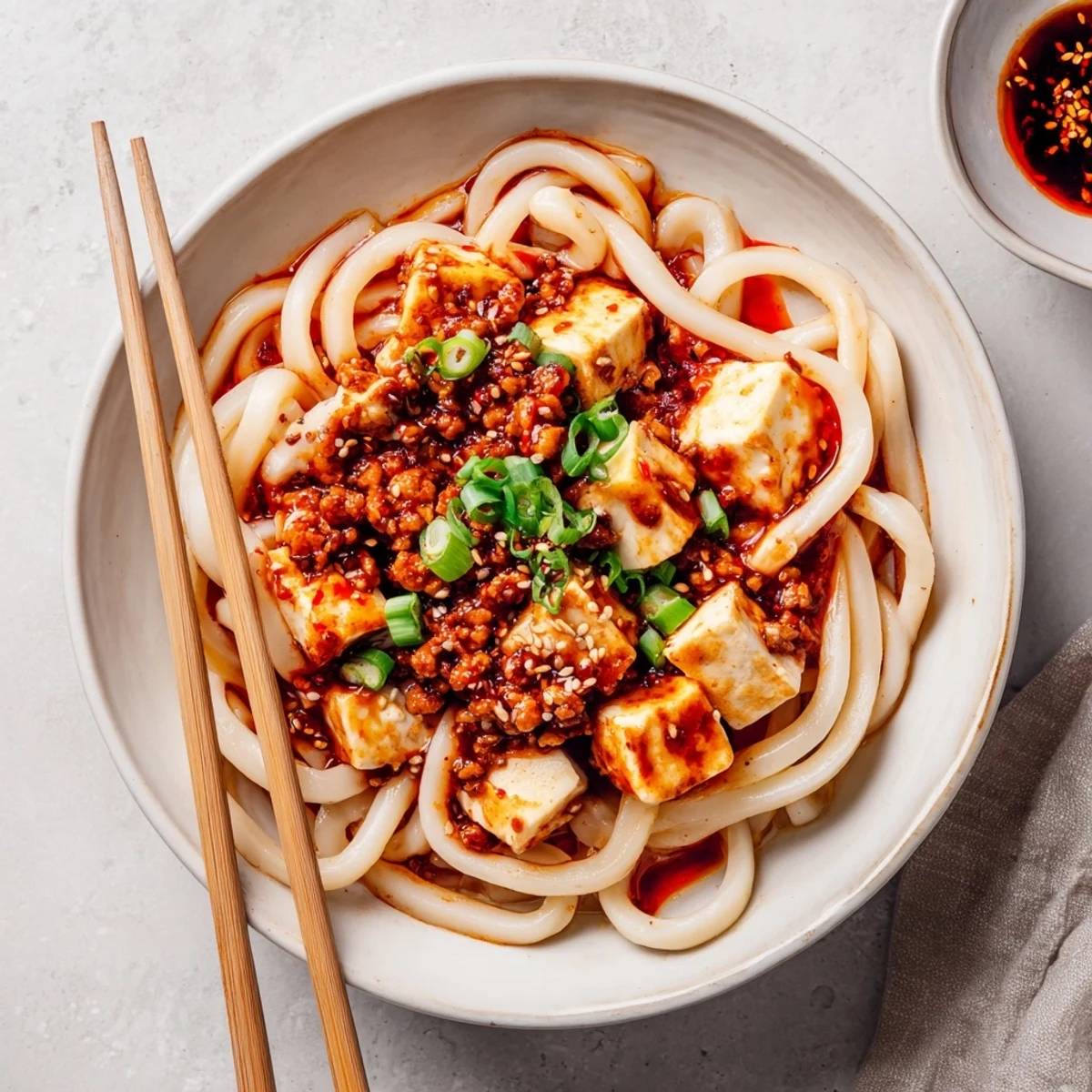
Save This comforting fusion dish brings together the bold, numbing spice of Sichuan mapo tofu with the satisfying chew of Japanese udon noodles. Soft tofu cubes and ground pork swim in a rich, aromatic sauce flavored with fermented chili bean paste, garlic, and ginger, while toasted Sichuan peppercorns add that signature tingle. The dish comes together in just 35 minutes, making it perfect for busy weeknights when you want something deeply satisfying.
Thick udon noodles provide the perfect canvas for the spicy sauce, their substantial texture standing up beautifully to the bold flavors. The cornstarch-thickened sauce clings to every strand, ensuring each bite delivers the full spectrum of tastes—savory, slightly sweet, and positively packed with heat. Garnish with fresh green onions, sesame seeds, and a drizzle of chili oil for extra depth.
The first time I combined mapo tofu with udon was purely accidental after I forgot to buy rice and had only thick Japanese noodles in my pantry. That kitchen mistake turned into one of my favorite weeknight discoveries, the chewy noodles catching every drop of that numbing spicy sauce in ways rice never could.
Last winter, my roommate came home during a snowstorm smelling like cold air and took one whiff of the Sichuan peppercorns toasting in my wok before practically begging for a bowl. We ate steaming portions on the couch while watching snow pile up outside, and she demanded I teach her the recipe the very next weekend.
Ingredients
- Soft tofu: I always cut it into larger cubes because they hold their shape better while simmering in that spicy sauce
- Ground pork: Brown it thoroughly until those crispy bits form, they add essential texture to every mouthful
- Fresh udon noodles: These thick chewy noodles are what make this fusion work so beautifully with the mapo sauce
- Sichuan peppercorns: Lightly crushing them releases their signature numbing aroma that defines authentic mapo flavor
- Doubanjiang: This fermented chili bean paste is the soul of the dish, spend the extra money for a good quality brand
- Cornstarch slurry: Add this gradually while stirring to reach your perfect sauce consistency, some like it thicker than others
Instructions
- Prep your ingredients:
- Cube the tofu carefully, mince your aromatics ahead of time, and set that water to boil first so everything is ready when you need it.
- Toast the peppercorns:
- Heat your oil and let the Sichuan peppercorns sizzle for about 30 seconds until that distinct citrusy fragrance fills your kitchen.
- Build your aromatics:
- Add garlic, ginger, and the white parts of your spring onions, stirring constantly for one minute until the smell is incredible.
- Brown the protein:
- Crank up the heat and cook your pork until it is thoroughly browned and crispy, breaking it into small pieces as it cooks.
- Awaken the chili paste:
- Stir in the doubanjiang and let it cook for a couple minutes until the oil turns a gorgeous deep red color.
- Add the sauce base:
- Pour in your soy sauce, oyster sauce, Shaoxing wine, and sugar, mixing everything together thoroughly.
- Simmer the tofu:
- Gently add those tofu cubes and broth, letting everything simmer for five minutes while spooning sauce over the top occasionally.
- Thicken the sauce:
- Stir in your cornstarch mixture and let it bubble for another few minutes until the sauce coats the back of a spoon.
- Cook the noodles:
- Drop your udon into boiling water and cook according to the package, then drain and divide between your waiting bowls.
- Bring it together:
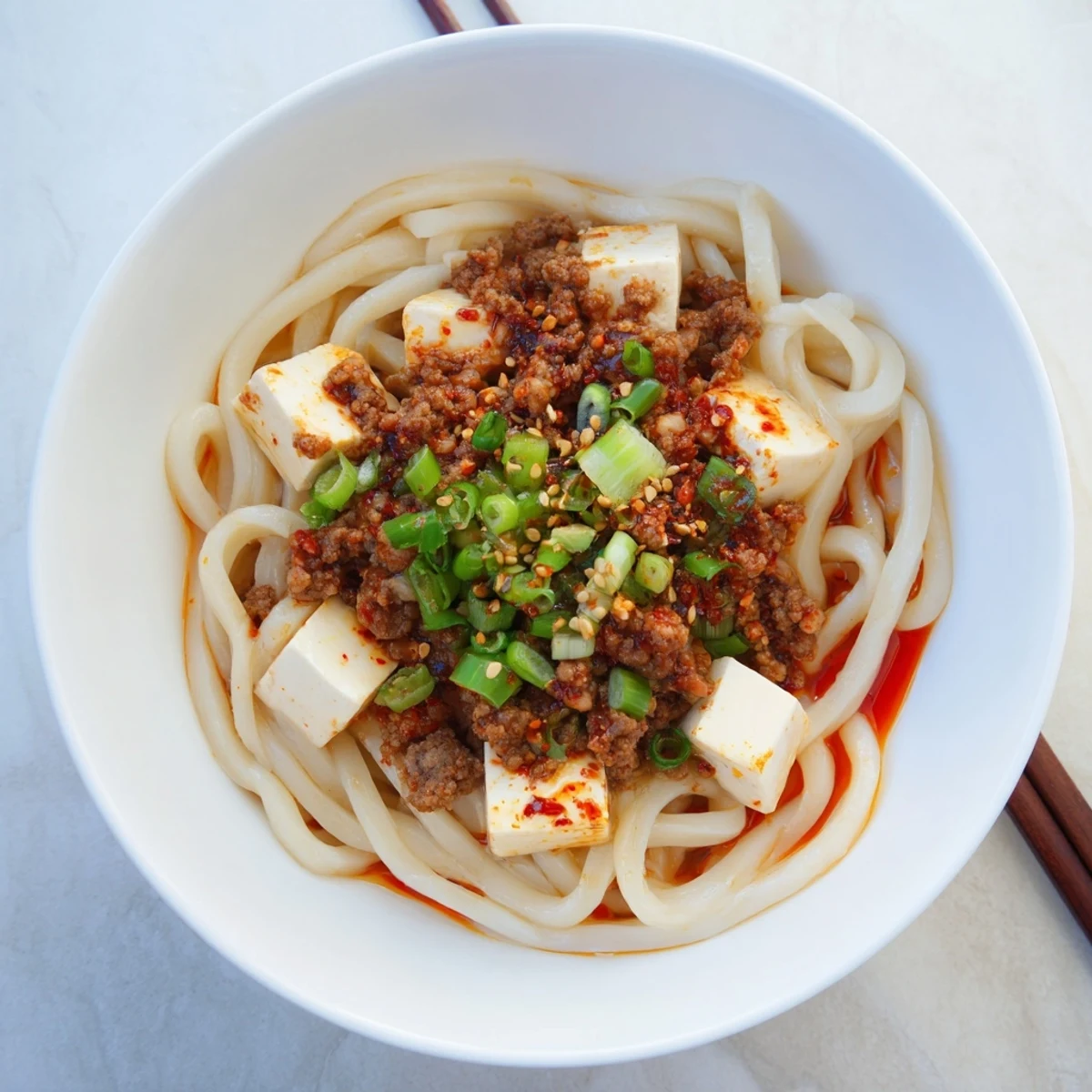
- Spoon generous amounts of that spicy mapo goodness over your noodles and finish with green onions, sesame seeds, and chili oil.
 Save
Save This recipe became my go-to comfort meal during graduate school when I needed something filling but did not have the energy for elaborate cooking. Now whenever friends come over for dinner, they somehow steer the conversation toward this dish until I offer to make it.
Making It Your Own
I have learned that the thickness of the sauce is entirely personal preference. My sister likes hers almost soupy enough to drink, while I prefer a coating that clings heavily to every strand of udon.
The Heat Factor
Some nights I double the doubanjiang when I am craving serious heat, other times I keep it mild for guests who are sensitive to spice. Always taste before adding any extra heat.
Perfect Pairings
A cold lager cuts through the richness beautifully, but a light sake works just as well if you prefer something more traditional.
- Keep extra green onions handy for fresh bites between spicy mouthfuls
- Have plain steamed vegetables ready for anyone who needs to cool down
- Cook the noodles right before serving so they do not clump together
 Save
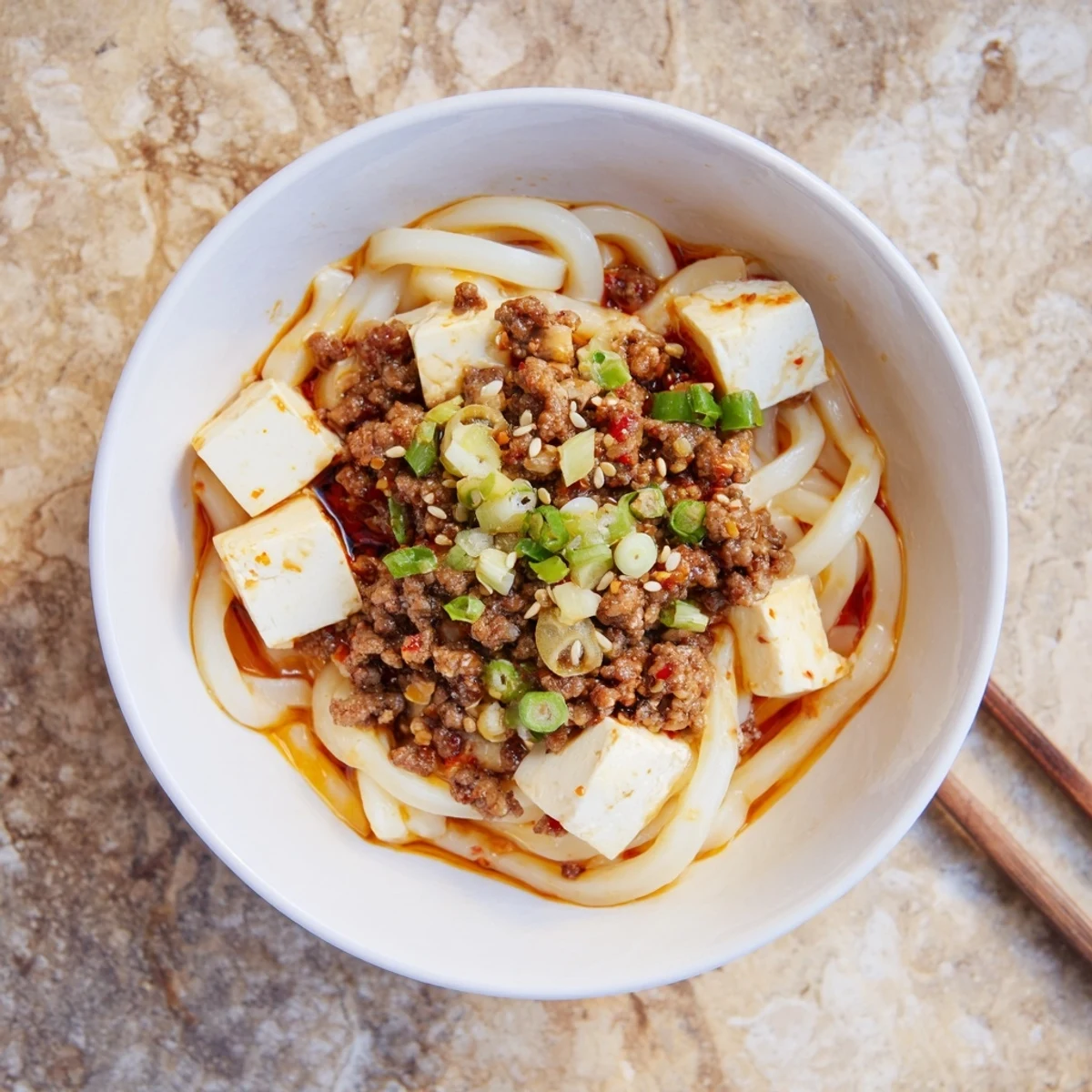
Save I hope this fusion becomes a staple in your kitchen like it has in mine. There is something deeply satisfying about twirling those thick noodles through spicy sauce after a long day.
Common Recipe Questions
- → Can I make Mapo Tofu Udon vegetarian?
-
Absolutely. Substitute ground pork with plant-based mince and replace oyster sauce with mushroom sauce. Use vegetable broth instead of chicken broth. The flavors remain just as robust and satisfying.
- → How spicy is this dish?
-
The heat level is medium to high, depending on your tolerance. Doubanjiang provides the primary spice, while Sichuan peppercorns add numbing warmth. Adjust the amount of chili paste or add chili oil to customize the heat to your preference.
- → Can I use dried udon noodles?
-
Fresh udon is ideal for its chewy texture, but dried udon works perfectly fine. Cook according to package instructions, usually boiling for 10-12 minutes until tender. Rice noodles or thick wheat noodles make acceptable substitutes if udon isn't available.
- → What makes mapo tofu authentic?
-
Authentic mapo tofu relies on three key ingredients: doubanjiang (fermented chili bean paste), Sichuan peppercorns for numbing sensation, and soft tofu that gently absorbs the sauce. The balance between spicy, savory, and slightly sweet flavors creates the distinctive taste profile.
- → How do I prevent tofu from breaking apart?
-
Handle tofu gently when adding to the pan. Use a spatula to spoon sauce over the cubes rather than stirring vigorously. Soft tofu is delicate, so minimal movement during simmering helps maintain its shape while still absorbing flavors.
- → Can I prepare components in advance?
-
You can prep all ingredients beforehand—cube tofu, mince aromatics, and mix sauces. However, cook the dish just before serving for best texture. Udon noodles tend to clump if cooked too far ahead, so boil them right before assembling bowls.