
 Save
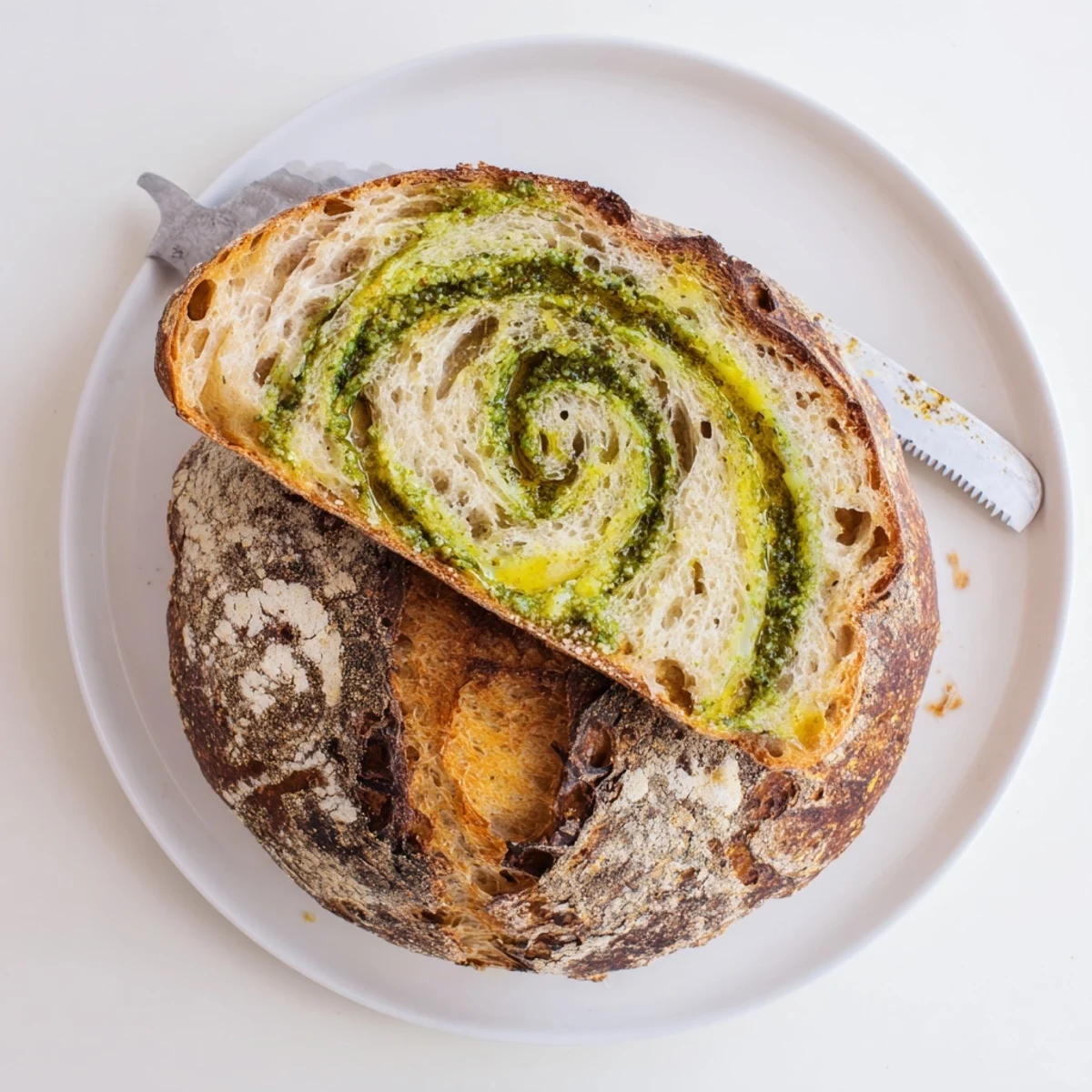
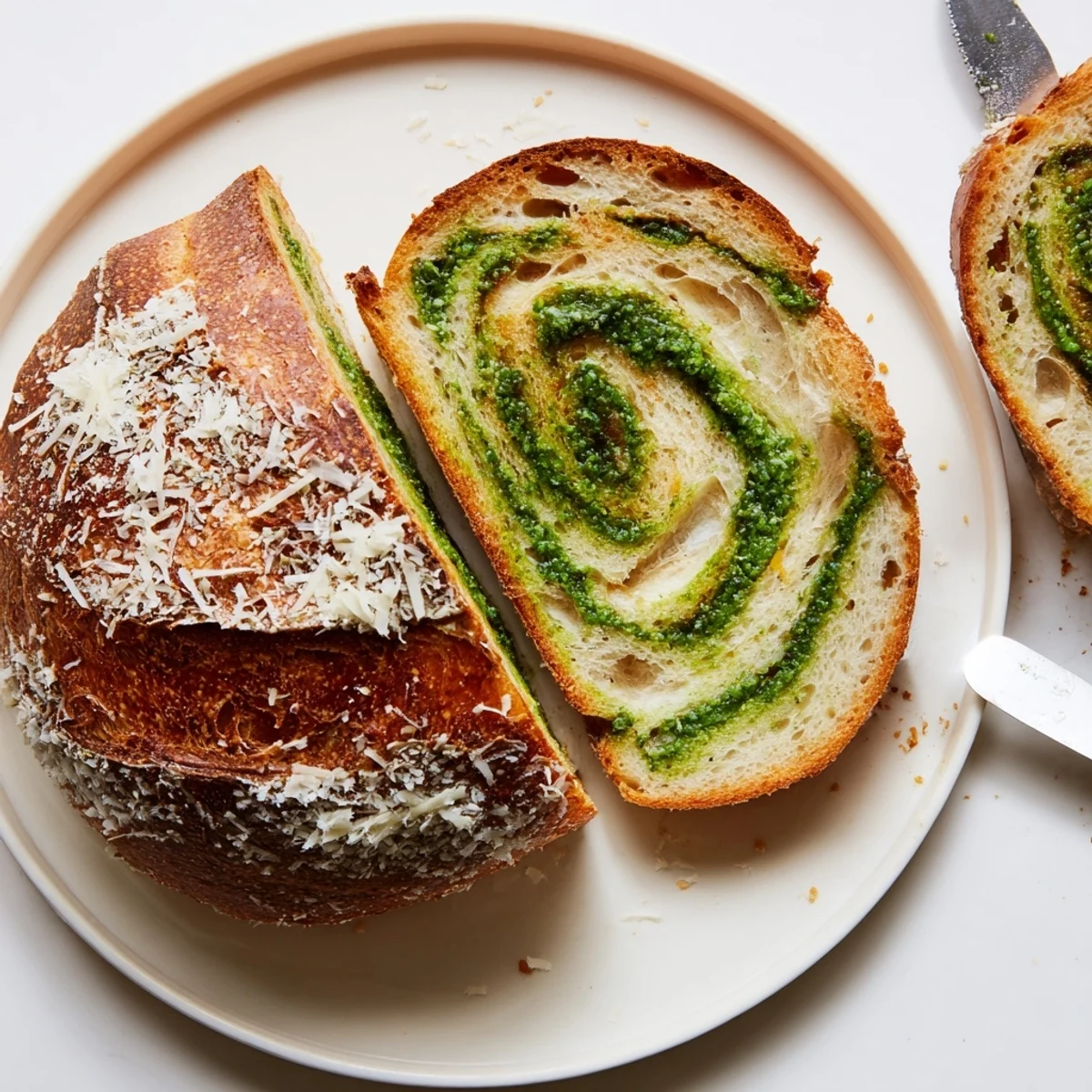
Save This artisan sourdough combines traditional fermentation techniques with vibrant Italian flavors. The dough undergoes autolyse and multiple stretch-and-fold sessions before being layered with aromatic basil pesto and freshly grated Parmesan. Baked in a Dutch oven at high heat, the loaf develops a crackling golden crust while maintaining a soft, chewy interior with beautiful pesto swirls throughout.
The overnight refrigeration option deepens the sourdough's characteristic tang, while the pesto infusion adds herbaceous brightness that pairs beautifully with the nutty, salty Parmesan topping. Perfect alongside pasta dishes, for gourmet grilled cheese, or simply dipped in olive oil and balsamic vinegar.
The moment my kitchen filled with that aroma of basil meeting warm sourdough, I knew this bread was something special. I had been experimenting with incorporating flavors into my usual sourdough routine, but most attempts left me with uneven distribution or disappointing results. Then came the idea to treat pesto like a filling rather than a mix-in, and everything changed. Now this green-swirled loaf has become the bread my friends actually text me about days after dinner.
Last summer, I served this at a backyard dinner party and watched three people immediately ask for the recipe before they even finished their first slice. Someone actually reached across the table to break off another piece while I was still talking. That night cemented this bread as my go-to when I want to serve something that feels impressive but still fits into my regular baking schedule.
Ingredients
- 500 g bread flour: Higher protein content than all-purpose gives you that satisfying chewy crumb structure
- 350 ml lukewarm water: Warm enough to wake up your starter but not hot enough to kill it
- 100 g active sourdough starter: Should be bubbly and have doubled in size since its last feeding
- 10 g fine sea salt: Enhances flavor and strengthens gluten structure
- 70 g basil pesto: Homemade or quality store-bought both work wonderfully here
- 50 g freshly grated Parmesan cheese: Freshly grated melts better than pre-shredded
- 1 tbsp olive oil: Helps the Parmesan adhere and creates that golden finish
Instructions
- The Autolyse Rest:
- Combine bread flour and water in a large bowl until just combined. Cover and let rest for 30 to 45 minutes to let the flour fully hydrate and start developing gluten on its own.
- Incorporating Starter:
- Add your active sourdough starter and salt to the rested dough. Mix thoroughly until everything is well incorporated and no dry pockets remain.
- Building Strength:
- Perform stretch-and-folds every 30 minutes for 2 hours, completing 4 sets total. Keep the dough covered between folds to prevent drying out.
- The Final Rest:
- After your last fold, let the dough rest for 1 hour at room temperature to relax the gluten before shaping.
- Preparing for Filling:
- Turn your dough onto a lightly floured surface. Gently stretch it into a rectangle, being careful not to tear the dough.
- Adding Flavor:
- Spread the pesto evenly over the dough, leaving about a 2 cm border around the edges. Sprinkle 40 g of your Parmesan over the pesto layer.
- Shaping the Loaf:
- Roll the dough up into a log from the short end. Shape into a round or batard, keeping the seam tight.
- Final Rise:
- Place into a well-floured banneton or bowl, seam side up. Cover and let rise for 2 to 3 hours at room temperature, or refrigerate overnight for deeper flavor development.
- Preheat Your Oven:
- Preheat to 230°C with your Dutch oven or baking stone inside to get it good and hot.
- Prepping for the Bake:
- Turn dough out onto parchment, brush top with olive oil, and sprinkle with remaining Parmesan. Score as desired.
- Baking Covered:
- Bake in preheated Dutch oven covered for 20 minutes to create steam and develop oven spring.
- Finishing Uncovered:
- Remove lid and bake 18 to 20 more minutes until golden brown and crusty. Cool completely on wire rack before slicing.
 Save
Save My sister who claims not to like pesto ate three slices the first time I made this, then asked if I could teach her how to make sourdough specifically for this recipe. Seeing someone change their mind about an ingredient because of how it is presented always reminds me why cooking matters.
Pesto Variations to Try
Sun-dried tomato pesto creates a beautiful orange-red swirl and adds a sweet concentrated flavor that pairs exceptionally well with the tangy sourdough. Walnut pesto brings earthiness and works wonderfully if you want something less traditional than basil. I have also experimented with arugula pesto for a peppery kick that makes this bread feel completely different.
Working with Filled Dough
Handling dough with wet fillings takes some practice and patience. The pesto makes things slippery and the dough wants to slide around more than usual. I work on a lightly floured surface and keep my hands floured too, reshaping as needed without overworking the dough. The end result is worth every sticky moment.
Serving Suggestions
This bread transforms simple meals into something that feels intentional and cared for. I love it toasted and topped with sliced fresh tomatoes in summer, or used as the base for an elevated grilled cheese with sharp cheddar and apple slices.
- Slice thicker and grill directly for panini-style sandwiches
- Cubed and toasted it becomes incredible croutons for caprese salad
- Leftover slices make the most decadent French toast you will ever try
 Save
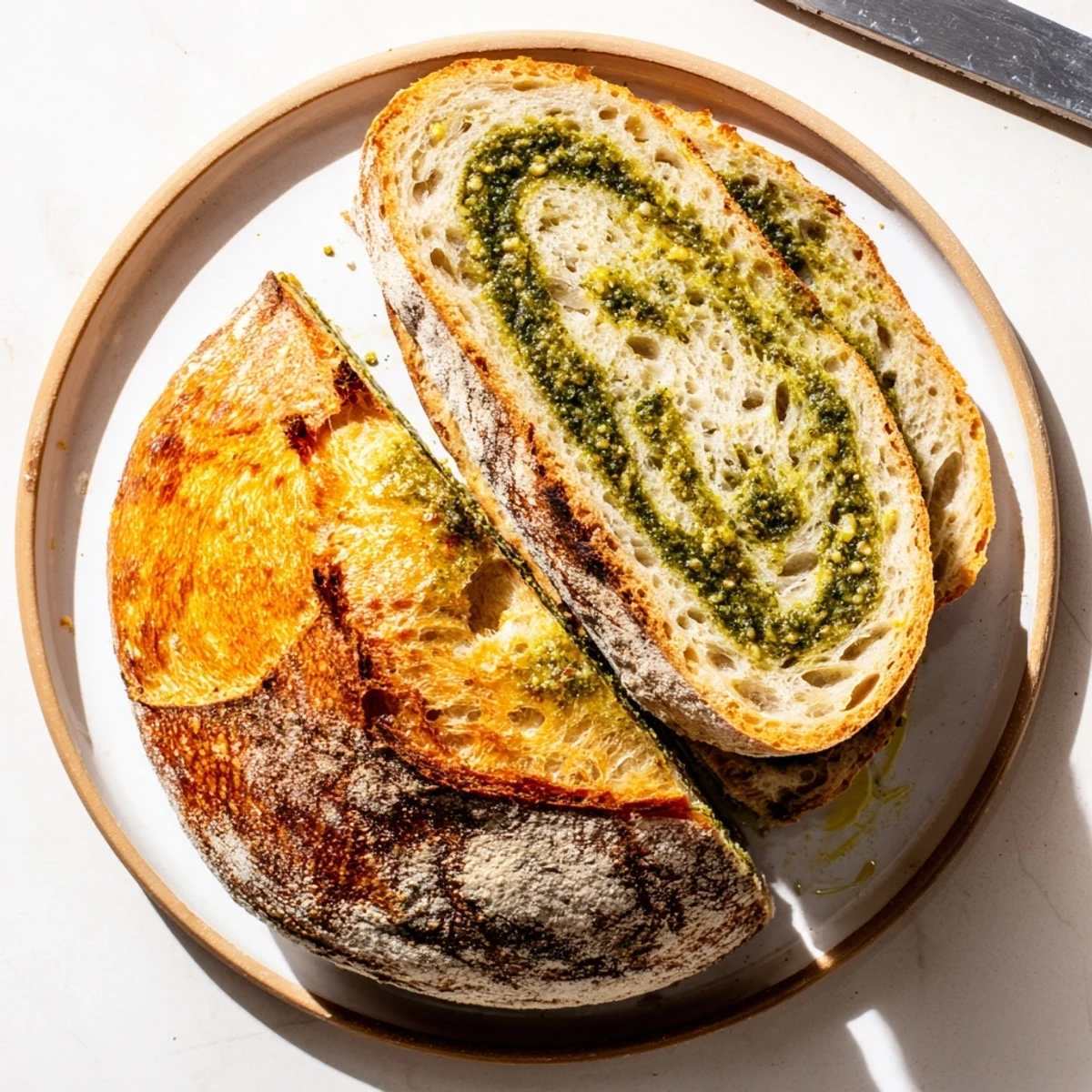
Save There is something deeply satisfying about cutting into a loaf and revealing those vibrant green swirls like a secret you kept until just the right moment.
Common Recipe Questions
- → Can I use active dry yeast instead of sourdough starter?
-
Yes, substitute 7g active dry yeast and reduce the initial water by 50ml. Skip the autolyse and proofing times, allowing about 1-2 hours for the first rise instead.
- → How should I store this bread?
-
Wrap tightly in plastic or store in a bread bag at room temperature for up to 3 days. For longer storage, slice and freeze in a resealable bag for up to 3 months.
- → Can I make this without a Dutch oven?
-
Bake on a preheated baking stone or heavy baking sheet. Create steam by placing a pan of ice cubes on the bottom rack when you put the bread in the oven.
- → What other pesto varieties work well?
-
Sun-dried tomato pesto adds rich umami flavor, while walnut or pistachio pesto provides earthy notes. Spinach-artichoke spread or roasted garlic also create delicious variations.
- → How do I know when the dough is properly proofed?
-
Press gently with your finger—if the indentation springs back slowly, it's ready. The dough should have increased by about 75% in size and look puffy with visible bubbles on the surface.
- → Can I make the pesto from scratch?
-
Blend fresh basil leaves, pine nuts, garlic, Parmesan, and extra virgin olive oil until smooth. Use within a week or freeze in ice cube trays for longer storage.